
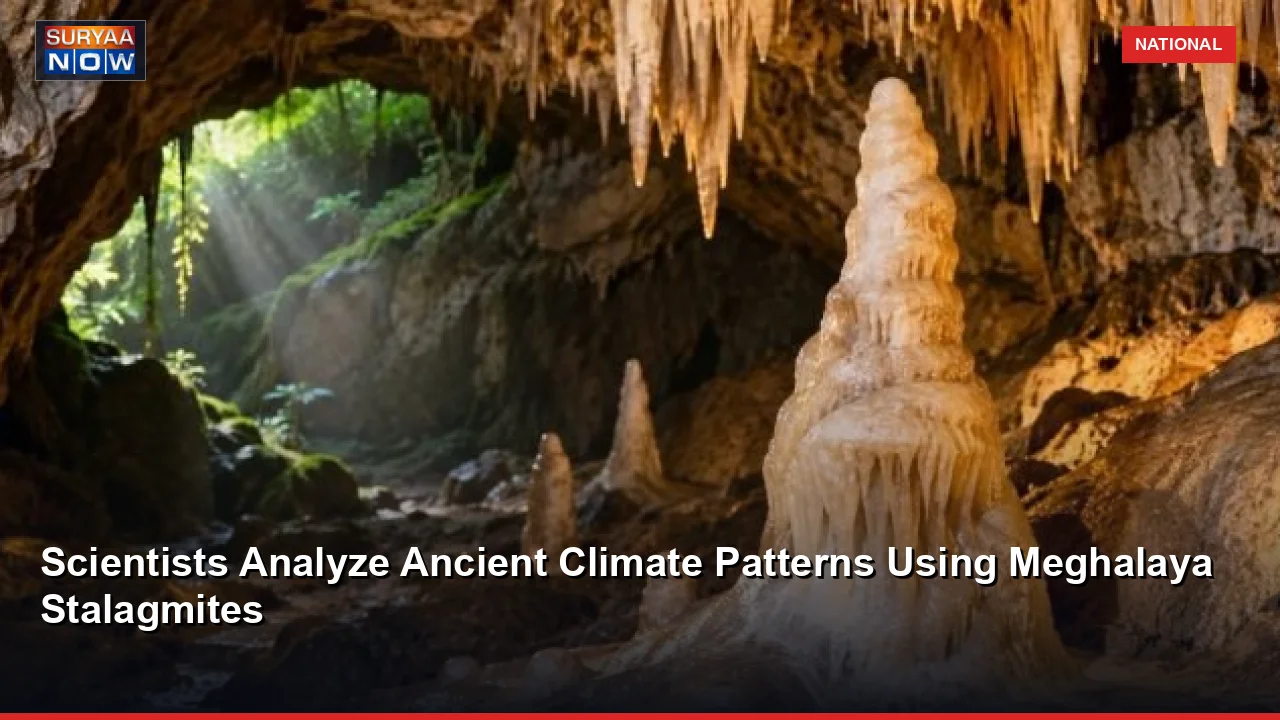
Suryaa National Desk: Scientists have revealed findings regarding climate conditions and monsoon changes in Northeast India from thousands of years ago. Through a comprehensive scientific study of stalagmite deposits found in caves in Meghalaya, researchers have analyzed rainfall trends and climate shifts that occurred in the region over the past 6,000 years. Experts noted that these mineral deposits, which form naturally in limestone caves, serve as evidence of past environmental conditions.
Stalagmites, which are calcium carbonate deposits formed by water dripping from cave ceilings, store information about climate changes within their layers over time. By analyzing uranium-thorium dating and oxygen isotope ratios in these deposits, scientists identified fluctuations in ancient rainfall, droughts, and temperatures. Researchers stated that these findings help in assessing the climate variations experienced by the Northeast region over centuries.
According to the researchers, this ancient data is crucial for understanding current global climate conditions, the impact of global warming, and monsoon uncertainty. Experts expressed that this scientific study will serve as a guide for predicting future rainfall changes in the Northeast and for formulating agricultural and water resource plans.