
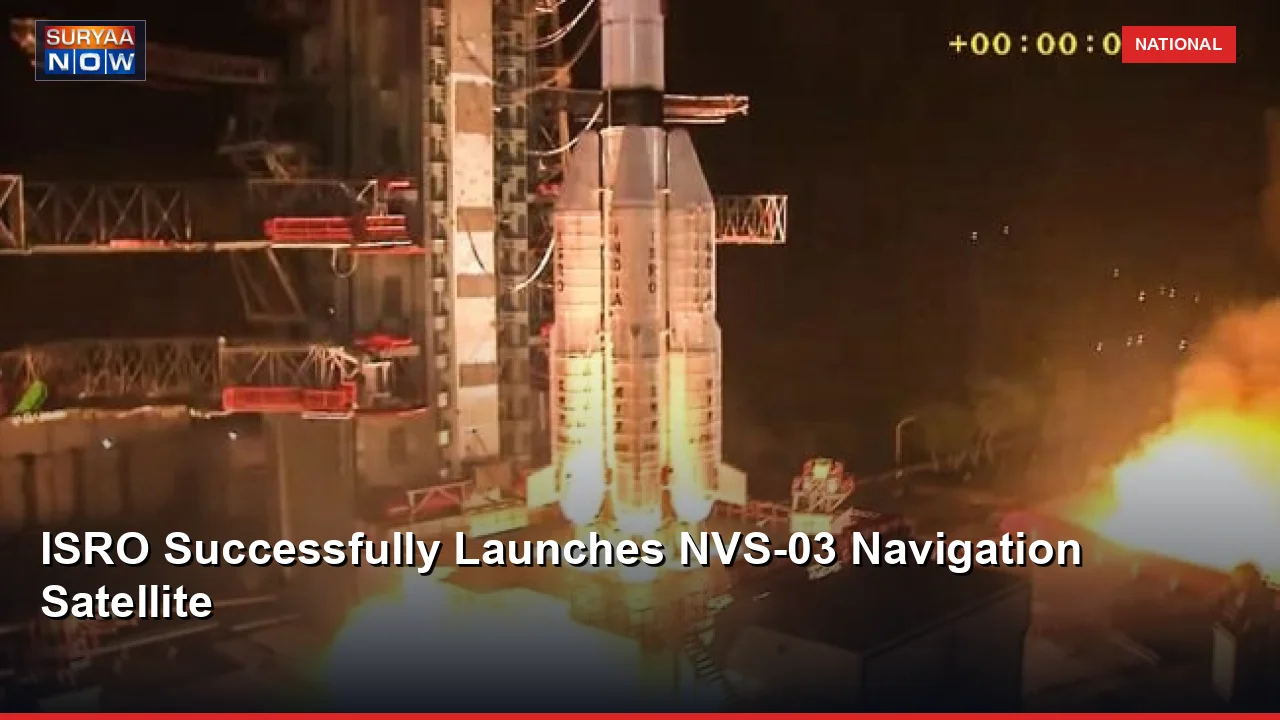
Suryaa National Desk: The Indian Space Research Organisation (ISRO) has successfully launched the next-generation NVS-03 satellite to strengthen the indigenous NavIC navigation system. The satellite was launched into its designated orbit from the Satish Dhawan Space Centre in Sriharikota using the GSLV-F18 rocket.
The NVS-03 is the third satellite in the second-generation navigation series. ISRO plans to launch a total of five satellites in this series. Weighing approximately 2,250 kilograms, the satellite was placed into a Geosynchronous Transfer Orbit. It is equipped with advanced navigation payloads operating in L1, L5, and S frequency bands. Scientists stated that the addition of the L1 signal improves the performance, accuracy, and compatibility of the NavIC system with modern receivers.
NavIC, which stands for Navigation with Indian Constellation, is an indigenous regional satellite navigation system. It provides precise time and location information for the Indian mainland and areas extending up to 1,500 kilometers from its borders. The system supports road and maritime transport, aircraft tracking, precision agriculture, disaster management, and telecommunications. It offers a Standard Positioning Service for all users and an encrypted Restricted Service for strategic requirements.
The satellite features an indigenously developed atomic clock to ensure precise timing, which is critical for navigation systems. This mission utilized an indigenous cryogenic stage. The launch aims to reduce reliance on foreign navigation systems and enhance domestic defense and civil capabilities.