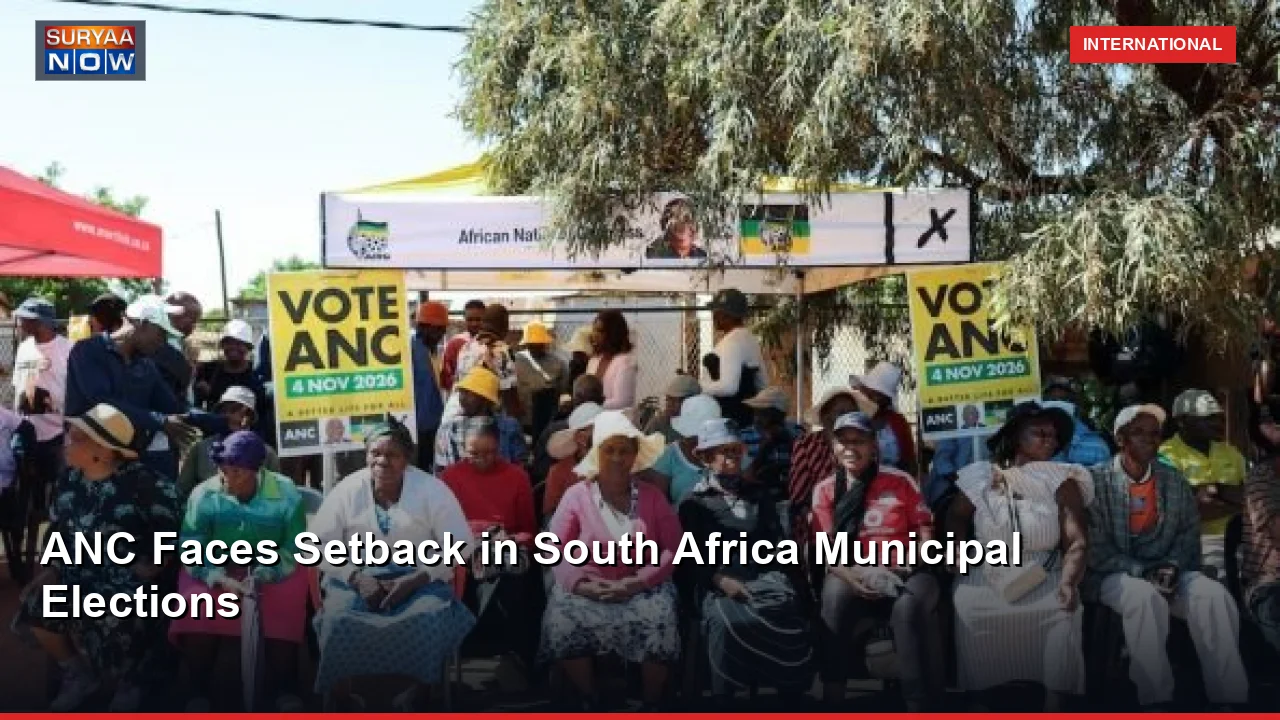
Suryaa International Desk: Significant changes are taking place in South Africa's political landscape as the ruling African National Congress party faces an unexpected setback in the recently held nationwide local body municipal elections. Initial trends emerging since the counting began indicate a notable decline in support for the ANC. The party maintains a very slim lead with approximately 32 percent of the vote share, while the opposition Democratic Alliance continues to offer strong competition close behind.
The ANC, which has been the dominant political party in the country since the era of Nelson Mandela, is seeing concern among its leadership over the drop in its local vote bank. In major cities such as Johannesburg and Pretoria, the ANC has fallen behind in several key seats as the Democratic Alliance and other regional parties have gained ground. Analysts attribute these preliminary results to public discontent regarding unemployment, corruption, and shortcomings in civic service delivery.
Responding to the trend, ANC Chairman Gwede Mantashe stated that people should wait until the final results are declared. He expressed confidence that the ANC's performance could improve by the end, noting that counting is currently underway in major cities and heavily populated townships. However, the ANC may inevitably face a situation where it must enter coalition talks with smaller parties to gain control of local councils.
Political experts analyze that these election outcomes could pave the way for new political coalitions in South Africa. A reduction in seats and control for the ANC would not only present a major challenge to the leadership of President Cyril Ramaphosa but also significantly impact the country's economic and social governance in the coming days. Additionally, these local results are expected to have a severe impact on the upcoming 2029 national elections.