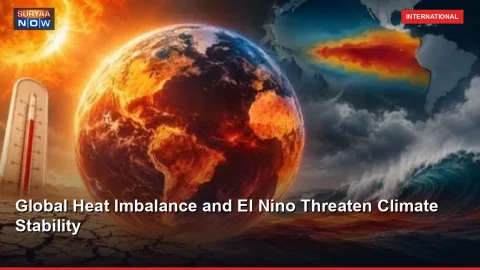
Suryaa International Desk: Climate scientists have issued warnings that 2026 may become the hottest year on record, as global average temperatures continue to rise beyond pre-industrial levels. Environmental researchers are expressing concern that 2027 could face even more severe conditions. Studies indicate that the accumulation of greenhouse gases and heat stored in the oceans are contributing to these rising temperatures.
Experts analyze that climate systems often show delayed, intensified effects. Specifically, the impact of El Nino conditions in the Pacific Ocean, which releases significant heat from the sea surface into the atmosphere, contributes to current peak temperatures. Scientists estimate that the ongoing thermal imbalance may lead to more extreme climate events in the coming year. The decline of natural cooling systems and the rapid melting of polar glaciers are further accelerating global warming.
These climate changes are currently linked to wildfires, flash floods, storms, and heatwaves. There is a potential risk of international food crises due to agricultural damage. Developing nations in Asia and Africa face risks of water shortages, while rising sea levels threaten coastal cities globally.
Scientists express concern that international limits set to control global warming are being exceeded. They advocate for an immediate reduction in fossil fuel usage and an acceleration of renewable energy adoption. Experts warn that failure to control industrial emissions could lead to irreversible environmental disasters, urging world leaders to implement immediate, collective emergency action to protect future generations.