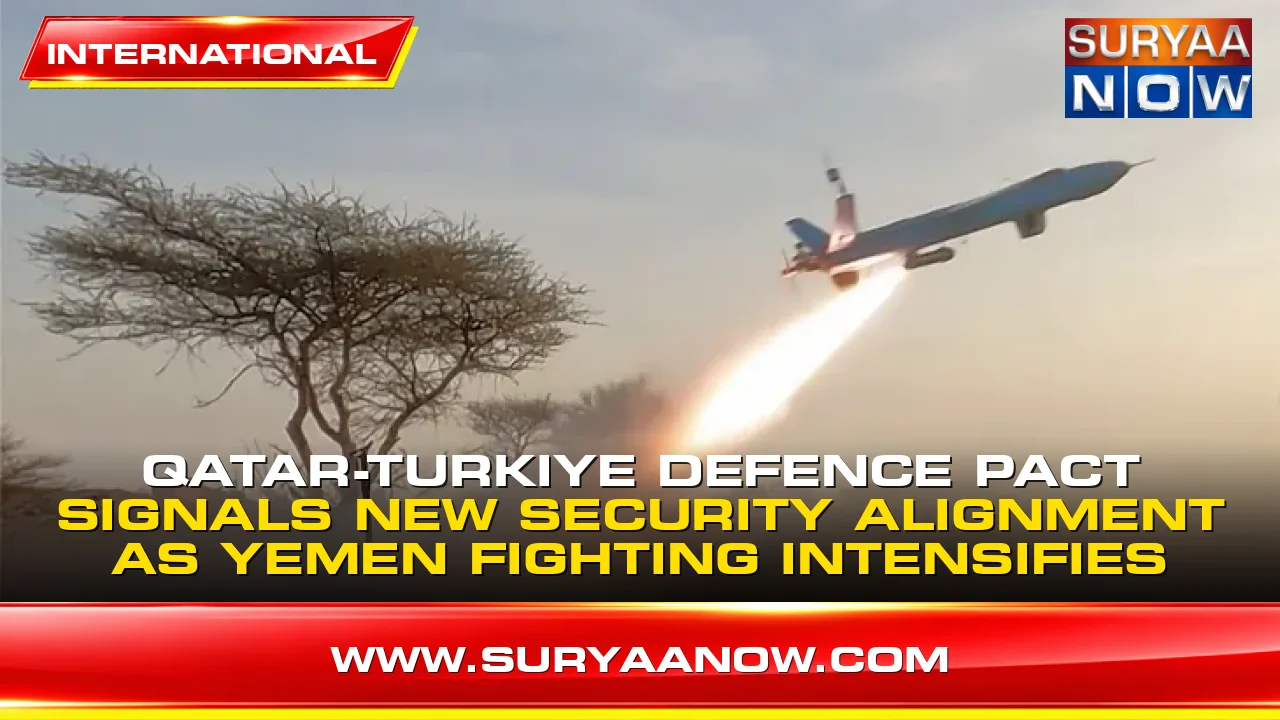
Suryaa Now Middle East Desk: Qatar and Turkiye have signed a new mutual defence agreement amid escalating military tensions across the Middle East, as fighting intensifies in Yemen, maritime security concerns grow in the Strait of Hormuz and the wider conflict involving Iran continues to threaten regional stability.
The agreement was signed following high-level discussions between Turkish President Recep Tayyip Erdogan and Qatar's Emir Sheikh Tamim bin Hamad Al Thani in Istanbul on Friday, November 13.
According to a joint statement, both countries have agreed to adopt a unified position against any external armed attack targeting either nation. The agreement also provides for closer consultations on security threats, defence policies, joint military exercises, defence industry cooperation and personnel training.
The Turkish presidency described the agreement as an important development in bilateral relations, while Qatar highlighted the importance of strengthening its strategic partnership with Ankara.
Yemen Fighting Forces Thousands of Families to Flee
Meanwhile, the security situation in Yemen continues to deteriorate as armed clashes and military operations spread across parts of the country.
The International Organization for Migration (IOM) estimates that approximately 340,000 people have been forced to leave their homes amid the escalating violence.
The humanitarian situation is becoming increasingly concerning, with displaced families facing difficulties accessing food, shelter, healthcare and other essential services.
The latest developments have raised fears that Yemen could experience another major phase of instability, further complicating efforts to achieve a lasting political settlement.
Strait of Hormuz Faces Growing Maritime Threats
Maritime security has also emerged as a major concern in the ongoing regional conflict.
Iran's Islamic Revolutionary Guard Corps (IRGC) said that two tankers exploded and caught fire after hitting naval mines while travelling through what it described as an unauthorised route in the Strait of Hormuz.
The incidents have intensified concerns over commercial shipping and energy transportation through one of the world's most strategically important maritime corridors.
Any prolonged disruption in the waterway could affect international oil supplies, shipping costs and global energy markets.
Iran Warns of Immediate Retaliation
Iran has warned that any renewed military attacks by the United States and Israel would trigger an immediate and decisive response.
At the United Nations Security Council, Iran accused certain Gulf countries, including Bahrain, of allowing their territories and military facilities to support operations against Tehran. Bahrain rejected the allegations and defended its position.
Separately, the United States Central Command (CENTCOM) said that two Iranian drones launched towards Bahrain had been intercepted, reporting no injuries or damage. It also rejected Iranian claims that US early-warning radar facilities in Bahrain had been attacked.
Regional Security Concerns Intensify
The Qatar-Turkiye agreement comes at a time when Gulf countries are reassessing their security arrangements amid the continuing Iran conflict.
Analysts believe the partnership could strengthen regional deterrence and expand military cooperation between Ankara and Doha.
However, the agreement's detailed operational provisions and the precise nature of any joint military response have not been publicly disclosed.
With fighting continuing in Yemen, tensions surrounding Iran and growing threats to international shipping, the latest developments u