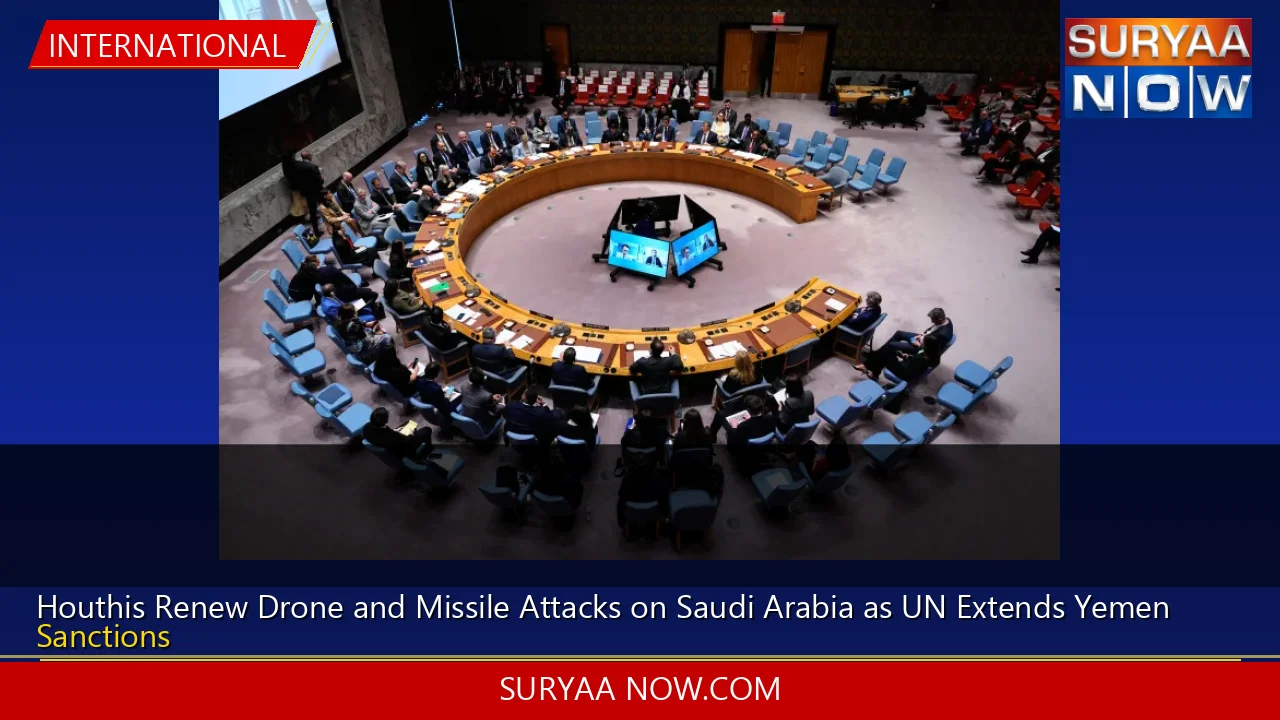
Suryaa Now International Desk: Yemen's Houthi movement has claimed a fresh wave of drone and missile attacks targeting Saudi Arabia's oil infrastructure and military installations, raising tensions across the Middle East. The developments came as the United Nations Security Council unanimously extended sanctions related to Yemen for another year, demanding an end to Houthi attacks and supporting efforts to restore regional stability.
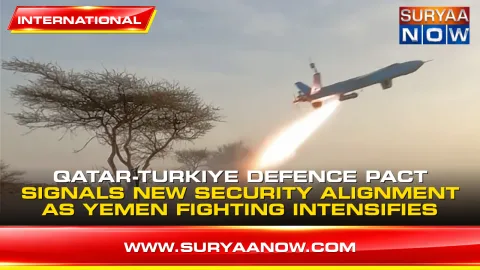
Saudi-led coalition forces said they intercepted suspected Houthi drones over the Riyadh region and the kingdom's Eastern Province on Thursday, November 12.
The latest escalation has increased concerns about the security of Saudi Arabia's energy infrastructure, international oil supplies and commercial shipping routes.
Houthis Claim Attacks on Saudi Oil Facilities
Houthi military spokesperson Yahya Saree announced that the group had carried out several attacks against strategic Saudi targets.
According to the statement, the targets included a pumping station along the East-West oil pipeline, an oil facility in Yanbu on the Red Sea coast and military installations.
The Houthis also claimed to have targeted a military cargo aircraft at Sharurah airport near the Yemeni border using a drone.
Another attack reportedly involved a ballistic missile directed towards King Khalid Air Base in Khamis Mushait. Saree claimed the missile scored a direct hit.
The group further claimed that Saudi Aramco's headquarters in Riyadh had been targeted.
However, the individual claims of successful strikes have not been independently verified.
Saudi Coalition Reports Drone Interceptions
Saudi-led coalition spokesperson Major General Turki Al-Maliki confirmed that air defence systems intercepted suspected Houthi drones over Riyadh and the Eastern Province.
The interceptions came amid increasing concerns about attacks on Saudi energy infrastructure and military facilities.
Saudi Arabia has been strengthening its air defence measures as tensions involving Iran and its regional allies continue to affect Gulf security.
The coalition has also continued military operations against Houthi positions in Yemen in support of the internationally recognised Yemeni government.
UN Security Council Extends Yemen Sanctions
Meanwhile, the United Nations Security Council unanimously approved the extension of Yemen-related sanctions for another year.
The measures include targeted asset freezes and travel restrictions against designated individuals and entities associated with the conflict.
The resolution also extends the mandate of the UN Panel of Experts monitoring the sanctions regime.
The Security Council condemned Houthi military escalation, including cross-border attacks against Saudi Arabia and threats to commercial shipping.
It called on all parties to avoid further escalation and resolve their differences through negotiations.
The resolution also emphasised that sanctions should not obstruct humanitarian assistance or essential supplies needed by Yemeni civilians.
Britain Pushes for Tighter Restrictions on Weapons Supplies
The United Kingdom has indicated that it will work with other Security Council members to strengthen restrictions on materials used by the Houthis to manufacture weapons.
British representatives highlighted concerns about the group's access to dual-use components and precursor chemicals that could support the production of drones and missiles.
The proposed restrictions aim to strengthen enforcement of the existing arms embargo.
The UN sanctions extension also provides continued monitoring of weapons-related activities connected to the conflict.
Yemen's Humanitarian Crisis Deepens
While military tensions continue, the humanitarian situation in Yemen remains severe.
The UN Office for the Coordination of Humanitarian Affairs reported that more than 333,000 people had been displaced since the beginning of August 2026.
More than 24,000 people were displaced in the week preceding November 12 alone.
The UN warned that continued fighting was damaging healthcare facilities, forcing families to leave their homes and making humanitarian operations increasingly difficult.
More than 22.3 million people in Yemen require humanitarian assistance and protection, according to UN figures cited during the Security Council discussions.
Saudi Arabia Seeks EU Action Against Houthis
Saudi Arabia is also pressing the European Union to designate the Houthi movement as a terrorist organisation.
According to Reuters, Riyadh has been urging European governments to consider the designation amid renewed attacks against the kingdom.
However, European officials have expressed concerns that such a decision could complicate diplomatic efforts and restrict channels needed for future peace negotiations.
The designation would require unanimous approval from all 27 EU member states.
European governments are also concerned about possible consequences for humanitarian assistance and maritime security.
Regional Security Remains Uncertain
The latest developments underline the growing connection between the Yemen conflict and wider regional tensions involving Iran, Saudi Arabia and other Middle Eastern countries.
Attacks targeting Saudi oil infrastructure could have implications beyond the region because the kingdom is a major supplier to international energy markets.
The Security Council's decision to extend sanctions reflects continuing international concern over the conflict, weapons supplies and threats to maritime trade.
With military operations continuing and diplomatic disagreements unresolved, Yemen's humanitarian crisis and regional security situation remain major international concerns.
Source: Al Jazeera, Reuters and United Nations.