
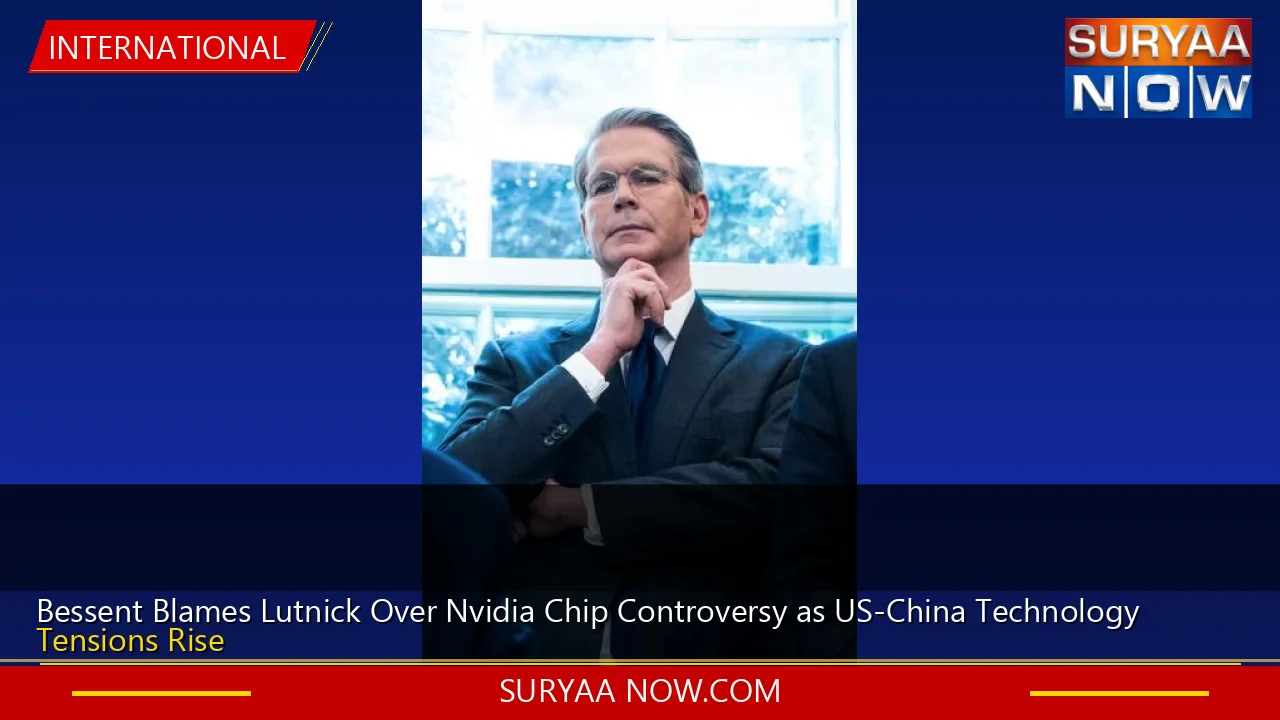
Suryaa Now International Desk: A growing dispute within US President Donald Trump's administration has erupted over the export of advanced artificial intelligence chips to China, with Treasury Secretary Scott Bessent publicly questioning Commerce Secretary Howard Lutnick's handling of a controversial Nvidia customer.
The disagreement centres on Singapore-based technology company Megaspeed, which US officials suspect of helping divert American-made advanced AI chips to China in violation of export restrictions.
Bessent has accused the Commerce Department of failing to take timely action against the company, despite warnings from several senior government agencies.
The controversy has also raised questions about the effectiveness of Washington's technology export controls and the influence of major technology companies over US policy.
Bessent Points Finger at Commerce Department
Speaking publicly on November 13, Bessent said the Treasury Department, Pentagon, State Department and US Trade Representative had supported placing Megaspeed on the Commerce Department's Entity List for months.
However, the final decision rests with the Commerce Department, headed by Lutnick.
Bessent questioned whether Nvidia had properly investigated its customers and taken sufficient steps to prevent advanced chips from reaching unauthorised destinations.
He said existing government powers were sufficient to enforce export restrictions and prevent the diversion of sensitive American technology.
The comments followed reports of a heated discussion between Bessent and Lutnick during a White House Situation Room meeting on November 5.
What Is the Megaspeed Controversy?
Megaspeed is a Singapore-based company that has emerged as a major purchaser of Nvidia's advanced semiconductors.
According to estimates cited by CNN, the company has purchased more than $4 billion worth of Nvidia chips.
US intelligence officials have reportedly raised concerns that some of these chips could have been redirected to China, potentially allowing Chinese organisations to access computing capabilities restricted under American export regulations.
Megaspeed has denied wrongdoing, describing itself as a legitimate and compliant business.
China's Foreign Ministry has also rejected allegations connecting a Megaspeed executive to Chinese intelligence activities, calling them baseless speculation.
Alleged Intelligence Connections Add to Controversy
The controversy attracted additional attention following reports concerning Nvidia chief executive Jensen Huang and Alice Huang, a former Megaspeed executive suspected by US intelligence officials of having links to Chinese espionage.
CNN reported that Jensen Huang acknowledged having an affair with Alice Huang.
US officials had reportedly received intelligence briefings about the alleged connection months before the issue became public.
The allegations have intensified scrutiny of Megaspeed's business relationships and the possibility that sensitive American technology could have reached Chinese entities through intermediary companies.
However, allegations of espionage and illegal chip diversion have not been independently established as proven facts.
Lutnick Faces Questions Over Export Restrictions
The Commerce Department has faced criticism for not placing Megaspeed on the Entity List despite concerns raised by other government agencies.
The Entity List restricts American companies from supplying designated foreign businesses with certain US-origin products and technologies without obtaining government licences.
Critics argue that delays in imposing restrictions could create opportunities for sensitive AI technology to reach countries and organisations considered national security risks by Washington.
Lutnick has previously warned that excessively strict export controls could damage American businesses and increase tensions with China.
The Commerce Department has denied allegations that it deliberately delayed action or gave preferential treatment to Nvidia.
Nvidia's Role in the US-China AI Competition
Nvidia is one of the world's leading manufacturers of advanced AI processors, which are essential for training large artificial intelligence models and operating powerful data centres.
Its chips have become strategically important in the competition between the United States and China over artificial intelligence, computing infrastructure and military technology.
Washington has introduced export restrictions to limit China's access to its most advanced semiconductor technology.
However, American policymakers remain divided over whether allowing selected chip sales could preserve US technological influence or strengthen China's AI capabilities.
Congressional Pressure and Political Fallout
The controversy is now attracting attention from members of the US Congress.
Lawmakers from both political parties have questioned the Commerce Department's handling of the matter.
Senate Banking Committee Chairman Tim Scott has sought testimony from Lutnick regarding the department's export-control decisions.
Reports have also indicated that officials within the White House have discussed Lutnick's position amid growing criticism of his handling of technology exports.
The Commerce Department has defended its record, pointing to enforcement actions and restrictions already imposed on certain semiconductor products.
A Critical Test for US Technology Policy
The dispute exposes differences within the Trump administration over how aggressively the United States should restrict China's access to advanced AI technology.
Bessent and other officials have emphasised national security concerns and stricter enforcement, while Lutnick has highlighted the potential economic consequences of additional restrictions.
For Nvidia, the controversy creates uncertainty around its international sales strategy and the regulatory environment governing advanced chip exports.
The immediate challenge for Washington is to strengthen export enforcement while balancing national security priorities, commercial interests and the broader US-China trade relationship.
Source: CNN, Reuters and Axios.