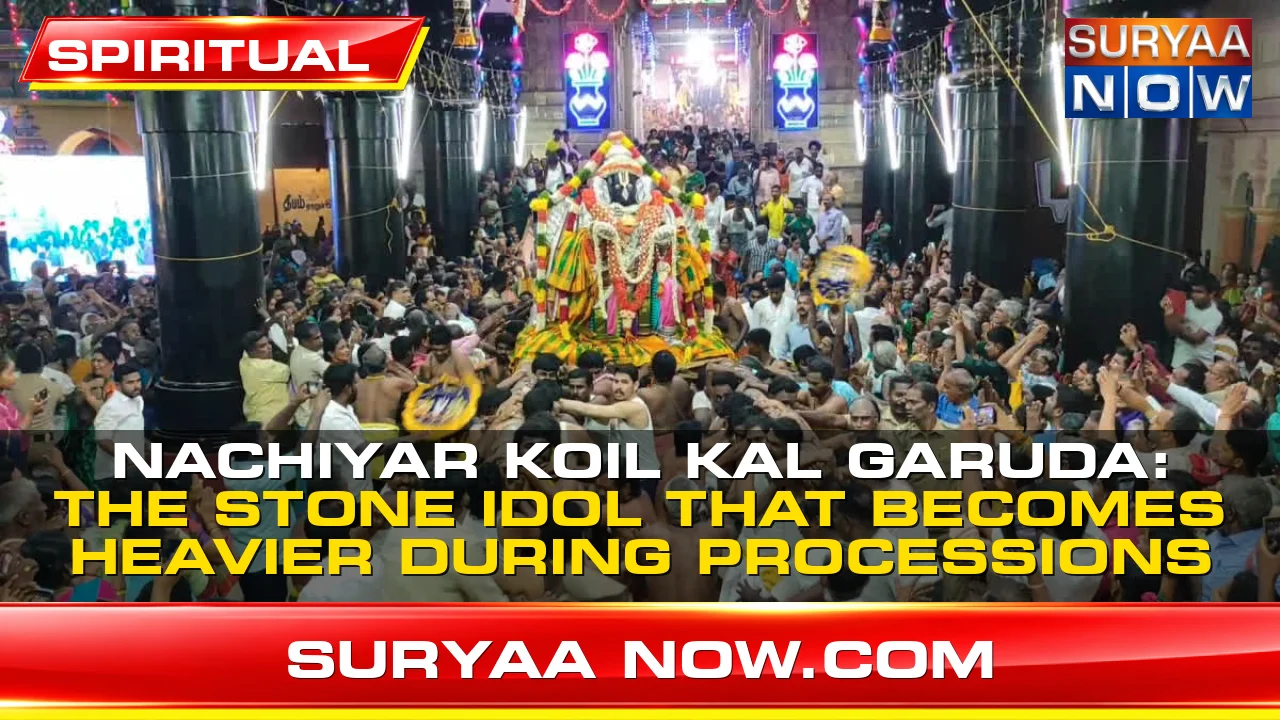
Suryaa Now Devotional Desk: Garuda, the divine vehicle of Lord Vishnu, holds a special place in Hindu tradition. Garuda Vahana Seva is considered one of the most significant and sacred occasions in Vaishnavite temples. At a famous temple in Tamil Nadu, a remarkable tradition associated with the stone idol of Garuda attracts the attention of devotees. According to temple beliefs, the idol becomes progressively heavier during processions and even appears to develop drops of sweat.
Nachiyar Koil: A Sacred Vaishnavite Divya Desam
Nachiyar Koil, also known as Thirunaraiyur, is located near Kumbakonam in Tamil Nadu. It is one of the 108 Divya Desams revered in the Sri Vaishnavite tradition.
The temple is renowned for its association with Lord Vishnu and Goddess Vanjulavalli Thayar. The Kal Garuda, a stone representation of Garuda, is one of the temple's most distinctive attractions.
The Mystery of the Increasing Weight of Kal Garuda
One of the most widely discussed traditions at Nachiyar Koil concerns the weight of the Kal Garuda idol during its ceremonial procession.
According to devotees and temple accounts, when the Garuda idol is first carried from the inner precincts of the temple, it is relatively light and can reportedly be carried by just four people.
However, as the procession moves through successive temple enclosures towards the main entrance, the number of people required to carry the idol increases significantly.
The traditional account describes the following progression:
-
Inner temple precinct: 4 people
-
Second enclosure: 8 people
-
Third enclosure: 16 people
-
Fourth enclosure: 32 people
-
Fifth enclosure: 64 people
-
Outside the temple, along the main streets: Around 120 people
This gradual increase in the number of bearers is regarded by devotees as a remarkable feature of the Kal Garuda procession.
Why Does the Garuda Idol Become Heavier?
A traditional explanation connects this phenomenon with Garuda's devotion and respect for Goddess Vanjulavalli Thayar.
During the annual processions, the Goddess is carried on a swan vehicle, while Lord Vishnu follows on Garuda. According to the temple legend, Garuda does not wish to move ahead of the Goddess.
Although a Garuda vehicle would traditionally be expected to move faster than a swan vehicle, Garuda is believed to have promised the Lord that he would remain behind the Goddess.
The legend says that Garuda increases his own weight to slow down the procession, ensuring that the Lord does not move ahead of the Goddess. Devotees regard this as an expression of Garuda's humility, devotion and reverence towards the divine mother.
The Belief That the Stone Idol Sweats
Another fascinating feature associated with the procession is the appearance of moisture on the Kal Garuda idol.
According to traditional accounts, drops resembling sweat can be seen on the stone idol during the procession. Devotees consider this a sign of Garuda's divine presence and devotion.
The phenomenon, along with the reported increase in the number of people needed to carry the idol, has made the Kal Garuda procession particularly popular among devotees.
A Unique Tradition of Devotion
The Kal Garuda tradition at Nachiyar Koil is remembered not only for its unusual procession but also for the spiritual message associated with it. The legend highlights humility, devotion and respect, showing Garuda placing the Goddess ahead of his own strength and speed.
For devotees visiting this historic Divya Desam, witnessing the Kal Garuda procession is considered a special religious experience.
Source attribution: Based on the traditional account supplied for this article. The reported changes in weight and appearance of moisture are presented as temple beliefs and devotional accounts, not as scientifically established findings.