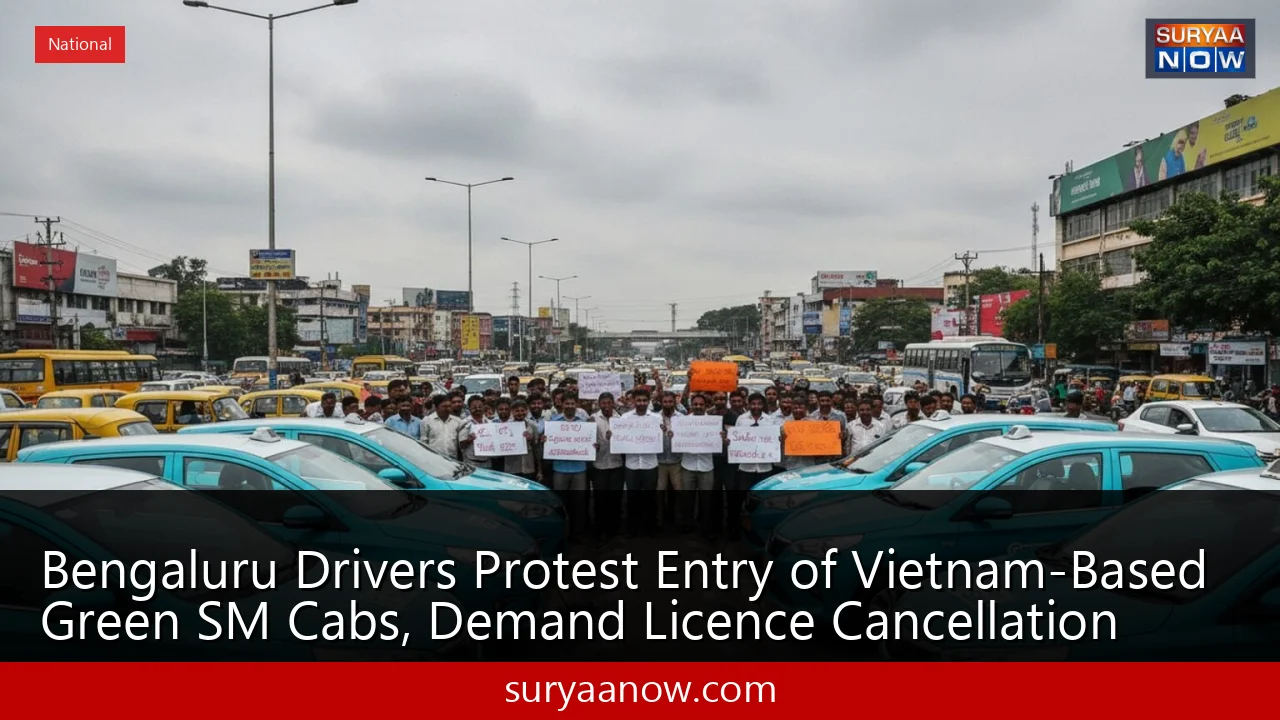
Suryaa Now Bengaluru Desk: Tensions are rising among cab and auto drivers in Bengaluru over the entry of Green SM, an electric taxi company backed by Vietnam-based conglomerate Vingroup. Several drivers' associations have raised concerns about the company's licensing, alleged expansion beyond its approved fleet limit and the potential impact on the livelihoods of local transport workers.
The controversy has intensified following reports that Green SM received an aggregator licence valid until September 2031. Karnataka Transport Minister Bhairathi Suresh reportedly expressed a lack of awareness about the licence, prompting questions from drivers' organisations over the transparency of the approval process and the functioning of the transport department.
Concerns Over Fleet Expansion and Licensing
According to drivers' associations, Green SM initially obtained permission to operate around 100 vehicles but has allegedly brought thousands of electric cars onto Bengaluru's roads. The associations have urged the Karnataka Transport Department to clarify the company's approved fleet strength and investigate whether all applicable aggregator regulations are being followed.
The entry of a large corporate-backed fleet has also raised concerns about competition in the city's transport sector.
Local auto drivers reportedly charge around ₹13–₹15 per kilometre, while cab fares generally range between ₹20 and ₹23. Drivers fear that Green SM's reported offer of fares as low as ₹8 per kilometre could put considerable pressure on their earnings.
Many independent drivers have purchased their vehicles through bank loans and depend on daily earnings to meet monthly EMI commitments. They argue that competing with a company backed by substantial financial resources could threaten their livelihoods.
Drivers' Associations Raise Four Major Demands
Several organisations, including the Karnataka State Drivers' Council and Peace Auto Union, have reportedly raised objections to the company's operations and demanded government intervention.
Their principal demands include:
-
Cancellation of the licence: Associations are demanding a review of the aggregator licence issued to Green SM and an investigation into the officials responsible for the approval process.
-
Restrictions on corporate-owned fleets: They want limits on the number of company-owned vehicles operating in the city and effective enforcement of minimum fare regulations to prevent allegedly unsustainable pricing practices.
-
Strict regulatory compliance: Drivers are seeking mandatory inspections of digital fare meters, taxi roof signs and GPS equipment. They have also called for proper police verification and enforcement of applicable local language and other driver eligibility requirements.
-
Protection of driver earnings: Associations have objected to stringent performance conditions, including ride acceptance targets and rating requirements, which they claim can affect driver payments. They are demanding legally enforceable minimum earnings and insurance benefits.
Employment Protection Versus Foreign Investment
The controversy has brought the debate over foreign investment, electric mobility and local employment into focus.
While the expansion of electric vehicle services can contribute to cleaner urban transportation and technological development, drivers' organisations argue that such growth should not come at the expense of existing self-employed transport workers.
They want both the Central and Karnataka governments to establish a clear policy framework that ensures fair competition between large corporate operators and independent drivers.
The immediate demand is for the Karnataka Transport Department to clarify Green SM's licensing conditions, approved fleet capacity and compliance with existing regulations.
As Bengaluru's electric mobility sector expands, the government's response to these concerns could have wider implications for the future of independent cab and auto drivers across India's metropolitan cities.