Jerusalem | November 11, 2026
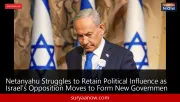
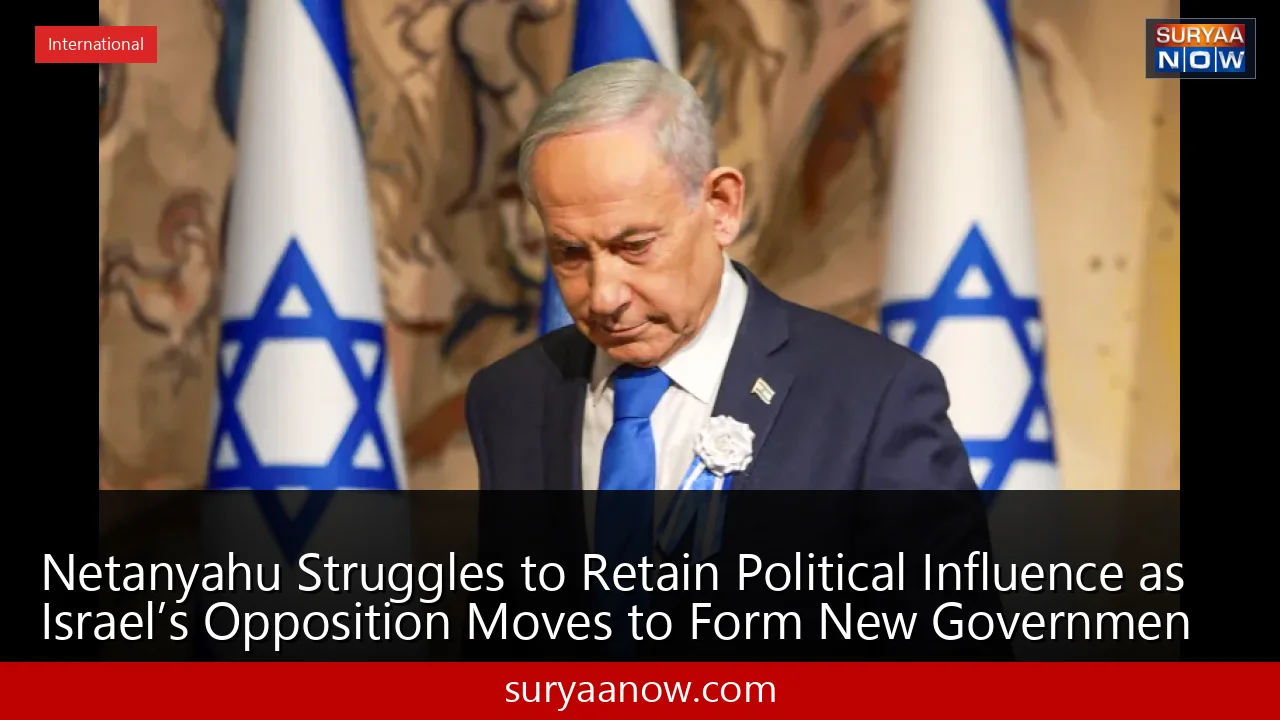
Israeli Prime Minister Benjamin Netanyahu is facing one of the biggest political challenges of his career as opposition parties move to strengthen their position in parliament and attempt to establish a new government following the country's inconclusive October elections.
The political developments have placed Netanyahu in an increasingly difficult position. Although his Likud party emerged as the largest single party in the October 27 election, his broader right-wing and religious-nationalist coalition failed to secure the 61 seats required for a parliamentary majority in Israel's 120-member Knesset.
Former Israeli military chief Gadi Eisenkot has been given the responsibility of attempting to form the next government after receiving support from a larger number of lawmakers during consultations with President Isaac Herzog.
Eisenkot has approximately six weeks, including a possible extension, to assemble a coalition capable of securing a majority. His efforts have increased pressure on Netanyahu, who is currently continuing as caretaker prime minister.
Opposition Seeks to Strengthen Its Position
The opposition is attempting to use its parliamentary numbers to influence key decisions even before a new government is formally established.
One of its immediate priorities is to replace Knesset Speaker Amir Ohana, a close Netanyahu ally. The opposition has also proposed measures including establishing a state commission of inquiry into the October 7, 2023, Hamas-led attack, introducing term limits for prime ministers and reversing controversial judicial changes introduced by Netanyahu's government.
These proposals could significantly affect Netanyahu's political future and the direction of Israeli governance.
Netanyahu Calls for Political Unity
Netanyahu has responded by appealing to opposition leaders to join a broad unity government under his leadership.
He has warned against the possibility of political instability and criticised the prospect of a government receiving support from Arab-led parties. His remarks have drawn criticism from opposition politicians, further intensifying tensions inside parliament.
Netanyahu's strategy also appears aimed at preventing religious and ultra-Orthodox parties from shifting their support towards Eisenkot.
The United Torah Judaism party, which has traditionally supported Netanyahu, has emerged as an important factor in the coalition negotiations. Its potential support for Eisenkot could strengthen the opposition's parliamentary position.
October 7 Attack Remains a Major Political Issue
The events surrounding the October 7, 2023, Hamas attack remain central to Israel's political debate.
Several newly elected lawmakers have personal connections to the attack and the subsequent conflict. Opposition members are demanding an independent investigation into whether the government and security establishment failed to respond adequately to warnings before the attack.
Netanyahu has faced sustained criticism over his government's handling of the security situation and the subsequent war in Gaza. He has denied wrongdoing.
The proposed investigation could become a major political challenge if the opposition succeeds in forming a government.
Netanyahu's Political Future at Stake
Netanyahu is also facing ongoing corruption proceedings in Israel, which he has consistently denied. A change of government could alter the political circumstances surrounding his leadership and future influence.
For now, the prime minister retains caretaker authority, including significant responsibilities relating to national security. However, his ability to shape the country's political direction could diminish if Eisenkot successfully establishes a coalition.
The coming weeks will therefore be crucial for both leaders. Eisenkot must overcome differences among opposition parties to secure a governing majority, while Netanyahu is attempting to maintain his political relevance and prevent the formation of an alternative government.
Israel's political future now depends on the outcome of these negotiations and whether the opposition can translate its parliamentary advantage into a stable government.
Source: Al Jazeera; additional reporting cross-checked with Reuters and international news reports.
By: SuryaaNow Desk