Washington / Tehran | November 11, 2026
The United States House of Representatives has blocked an attempt to impeach Defence Secretary Pete Hegseth over his role in the ongoing war against Iran. Meanwhile, Tehran has dismissed reports of diplomatic negotiations with Washington, raising fresh questions about efforts to end the prolonged conflict.
The US House voted 211-204 on Tuesday to refer the impeachment resolution against Hegseth to the Republican-controlled House Judiciary Committee. The procedural decision effectively stalled the immediate impeachment effort led by Republican Representative Thomas Massie.
The resolution contained eight articles of impeachment, accusing Hegseth of carrying out military operations against Iran without proper congressional authorisation, among other allegations. It also raised concerns about US military operations involving Venezuela and alleged attacks on vessels in the Caribbean.
Republicans supported the procedural move, allowing the committee to determine whether further action should be taken. Hegseth will not face an immediate impeachment vote or Senate trial as a result of the decision.
US President Donald Trump welcomed the outcome and described the impeachment effort as a failure. He also publicly defended Hegseth, praising his performance in the administration.
Iran Rejects Reports of Negotiations With US
While Washington faces domestic political debate over the war, Iran has rejected claims that formal negotiations with the United States are underway.
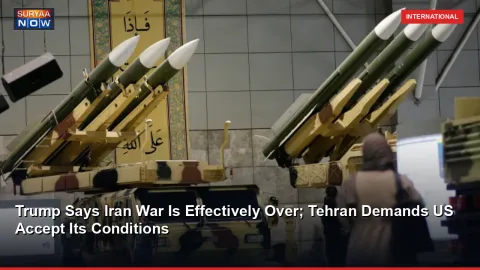
Iranian security official Mohsen Rezaei said Tehran was awaiting a clear response from Washington to its seven conditions for peace talks. He dismissed reports suggesting that discussions or a meeting between the two countries could take place in Qatar.
Rezaei argued that statements about ongoing negotiations were being used to ease economic pressure and influence global oil prices.
Iran has not publicly disclosed the complete list of its conditions. However, Iranian officials have indicated that the demands include lifting economic sanctions, ending the US naval blockade and stopping military operations across the region, particularly Israeli attacks in Lebanon.
Strait of Hormuz Remains a Major Concern
Iran has maintained that the strategically important Strait of Hormuz will remain closed until its demands are addressed.
The waterway is a critical international shipping route for global oil and gas supplies. Continued restrictions and security incidents in the region have raised concerns about energy markets and international maritime trade.
Iranian officials have also reported incidents involving ships striking naval mines in the strait, adding to concerns over commercial shipping safety.
US Signals Openness to Diplomatic Solutions
US Secretary of State Marco Rubio said Washington remained open to diplomacy but indicated that additional large-scale military operations against Iran were not currently necessary if economic pressure could achieve the administration's objectives.
US President Donald Trump has also spoken positively about the possibility of ending the conflict, while Qatar continues to play a diplomatic role in regional discussions.
However, Iran's rejection of reports about ongoing negotiations highlights the continuing gap between the two sides.
The latest developments suggest that diplomatic efforts remain uncertain, even as military tensions and disruptions to international energy supplies continue to affect the region.
SuryaaNow Desk