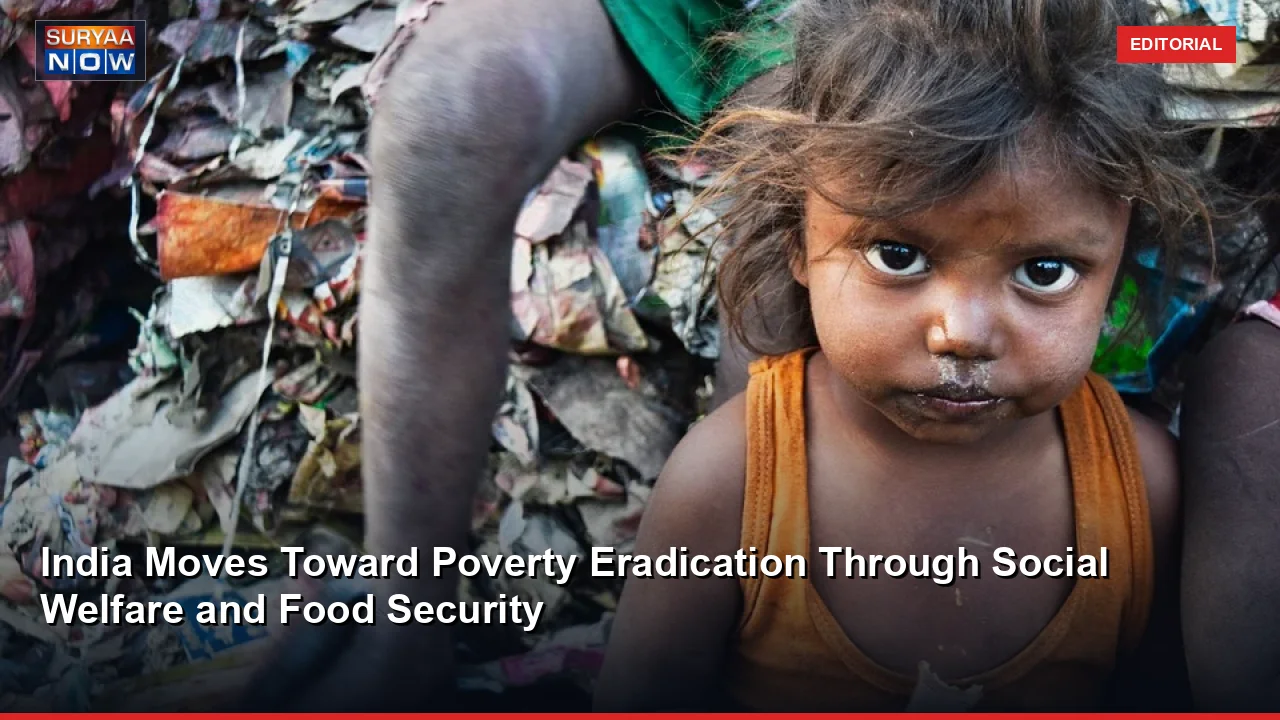
Suryaa News Desk: Achieving national economic progress and eliminating poverty requires addressing hunger as a primary necessity. Food donation programs serve as a symbol of humanitarian values, and there is a need for governments, the public, and voluntary organizations to expand these initiatives to ensure no one sleeps hungry.
To achieve social balance, daily food distribution centers, nutritional programs in schools, and free meal facilities in temples and community buildings must be increased. Continuous services, rather than those limited to festivals, can reduce the financial burden on impoverished families. Providing nutritious meals containing lentils and leafy vegetables can also help prevent malnutrition among children. Donors, youth, and business professionals are encouraged to participate in these efforts.
Beyond food distribution, long-term poverty eradication requires structural measures. Providing employment opportunities, skill development training, and financial assistance for self-employment can help families become self-reliant. Promoting small-scale industries, ensuring financial security for women, and providing free, quality education are essential for permanent poverty reduction.
Government welfare schemes must be implemented transparently to ensure benefits reach the intended recipients without corruption. Initiatives such as job placement camps for unemployed youth and support for modern agricultural practices can improve the national economy.
In rural areas, supporting the agricultural sector through timely access to seeds, fertilizers, and electricity can increase production and improve farmers' financial status. Furthermore, expanding the employment guarantee scheme and encouraging cottage industries can provide local jobs, reducing migration. Increased government investment in public schools and hospitals is necessary to prevent families from falling into debt due to education and medical expenses.
The ultimate goal remains the creation of a healthy, hunger-free, and poverty-free India for future generations. This requires a collaborative effort between the government, voluntary organizations, and donors to ensure every citizen has access to food, education, and healthcare.