
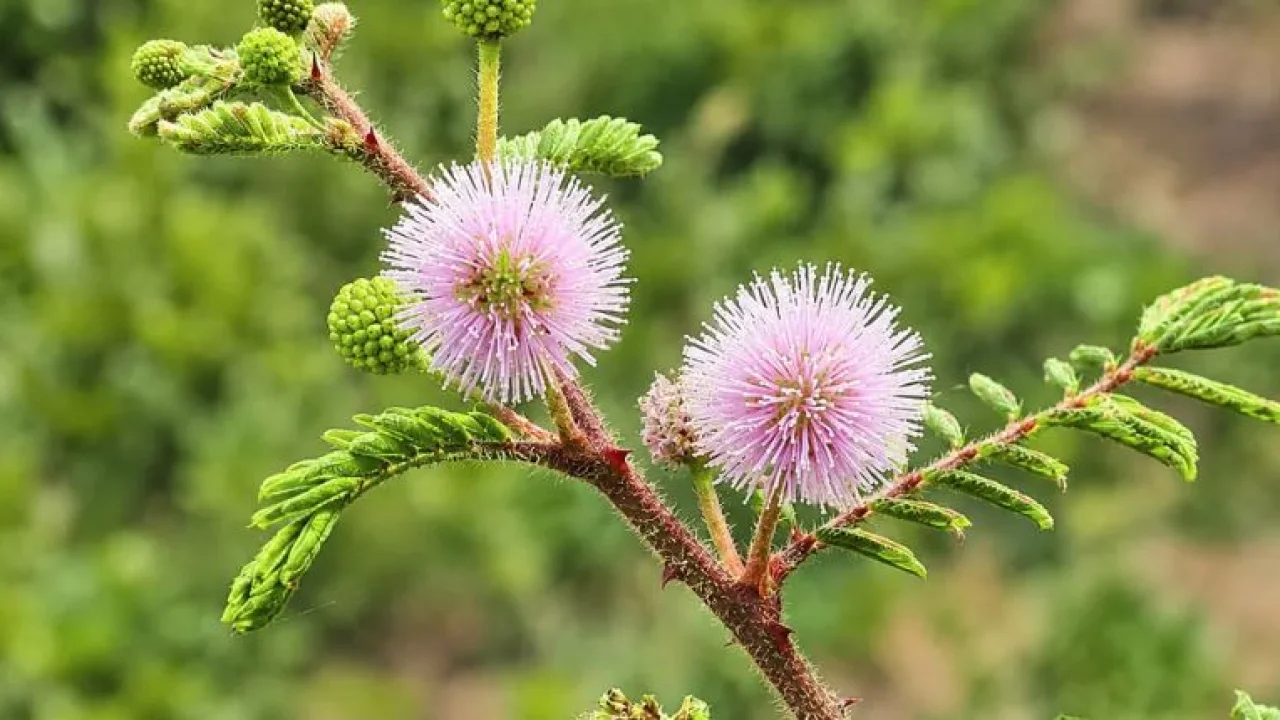
Suryaa Now International Desk: A plant introduced to Australia more than a century ago as an ornamental curiosity has developed into a major environmental challenge. The giant sensitive plant, scientifically known as Mimosa pigra, was introduced to the Northern Territory in the late 1800s. According to the Northern Territory Government, the invasive plant has now affected up to 140,000 hectares of land, while as much as 4.6 million hectares across Australia are considered vulnerable to infestation. The species is particularly prevalent in wetlands, floodplains and river systems across northern Australia.
The giant sensitive plant is native to tropical regions of the Americas and is known for its distinctive fern-like leaves that close when touched. It can grow into a thorny shrub reaching around six metres in height, with pink or mauve flower heads. Under suitable conditions, Mimosa pigra can form dense thickets that dominate large areas and suppress native vegetation. Its rapid growth and ability to occupy wetlands have made it a significant concern for Australia's biodiversity, pastoral activities and conservation efforts.
One of the major reasons for the plant’s spread is its ability to produce large quantities of seeds. A mature plant can produce hundreds of thousands of seeds under favourable conditions, while the seeds can be transported through water, animals, people, vehicles and machinery. Some seeds can remain dormant in soil for many years before germinating. The Northern Territory Government estimates that mimosa has already affected around 10 per cent of the territory’s wetlands and has become established in several major river systems across the Top End.
The invasive plant has consequences beyond vegetation loss. Dense, thorny growth can restrict access for people and animals, reduce pasture carrying capacity and make livestock mustering more difficult. It can also affect access to areas used by Indigenous communities for traditional activities and harvesting. Because of these impacts, giant sensitive plant is classified as a Weed of National Significance in Australia. Authorities are using a combination of herbicides, mechanical removal, fire management and biological control to contain its spread, while land managers are also being encouraged to prevent seeds from being transported on vehicles, machinery and boats.