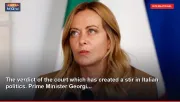
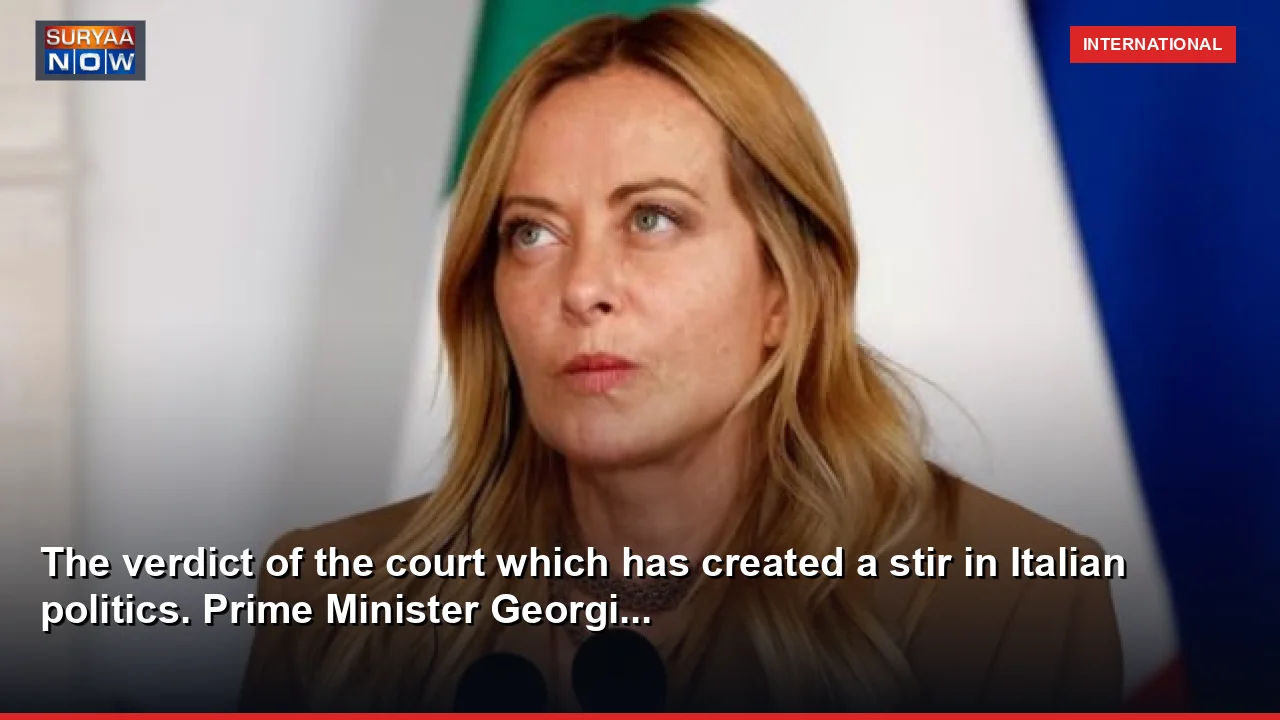
Suryaa Now International Desk: Italian court frees university researcher accused of inciting violent protests The release by a court of a university researcher accused of inciting violent protests in Italy is creating a stir in the country's politics. Italy's Prime Minister Giorgia Meloni expressed his anger on this development. This decision taken by the judicial system in the matter of implementing the government's security policies and strict laws has led to deep dissatisfaction among the authorities. The verdict, which comes at a time when the government is cracking down on issues that disturb public order, has become a major cause of political and legal debate across the country. During some of the riots in the city of Milan, the police focused on the social media platform. Investigators found that the strategy for the violent protests was orchestrated by a Telegram group created under the name October 17 Movement.
Meloni's government recently brought in the strictest security decree targeting managers of companies that put public safety at risk. Under this Act, the accused are likely to be punished with heavy fines and rigorous imprisonment for a long period of time. Based on these rules, the police arrested the researcher. However, the judge who tried the case gave a key verdict in favor of the accused. The court held that the accused did not post the disputed messages directly in the said Telegram group but were sent by other users. It concluded that there was insufficient evidence to prove that the accused directly encouraged and supported the acts of violence.
In this context, the judge issued orders to release him without any permanent detention. This decision taken by the court has taken the government machinery by surprise. The incident raises a lot of questions about the implementation of new laws that the government is ambitiously implementing to maintain law and order in Italy. Concerns are being expressed in political circles that the government's efforts to arrest those who commit riots in the name of protests are facing legal hurdles. There is a lot of interest in European politics on what the future of this growing confrontation between the executive and the judiciary will lead to.